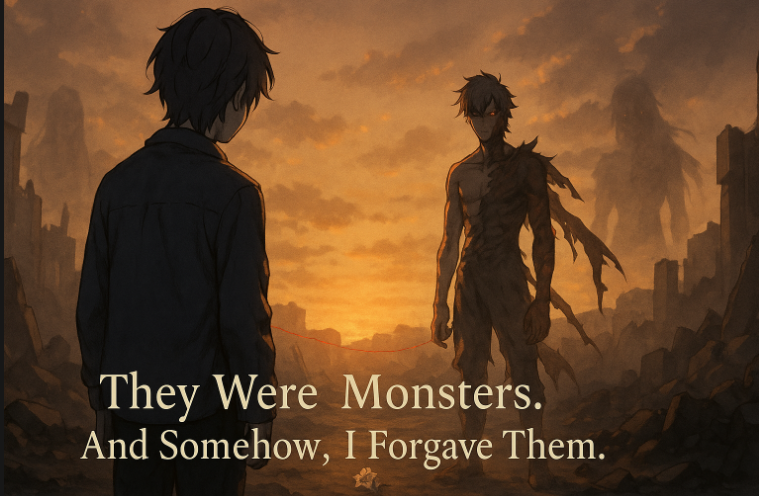
We all have that one anime character we weren’t supposed to forgive.
They did unspeakable things. Killed, manipulated, betrayed. Maybe they smiled while doing it. Maybe they didn’t even apologize. But somewhere along the way, the hate got complicated. The rage softened. And you caught yourself thinking…
“I get it. And I kind of… still care.”
That’s the unsettling beauty of dark anime characters — the ones who cross lines but still pull you in. They’re not “relatable” in a clean, Pinterest-quote kind of way. They’re broken, dangerous, sometimes unforgivable. And yet… they stay with you.
Not because they were redeemed.
But because they made you confront something real — like the part of yourself that’s not always innocent either.
When Monsters Look Like Us: The Breakdown of “Villainy”
Let’s start with Gendo Ikari from Evangelion.
I hated him. For years. Cold. Calculated. Barely a father.
But then I rewatched the series in my twenties, after experiencing loss, burnout, and a few too many moments of emotional numbness — and something cracked.
I didn’t forgive what he did.
But I understood it.
The way he shuts down. The way he pushes his son away while secretly building a plan to reunite with his dead wife. It’s not love, but it is longing. The kind that rots you.
Dark anime characters like Gendo aren’t “evil.” They’re just people who let grief or fear hollow them out until all that’s left is survival instinct.
And sometimes that survival turns monstrous.
The Real Damage Isn’t Physical — It’s Psychological
Take Shou Tucker from Fullmetal Alchemist: Brotherhood.
Yes — that Tucker. The chimera scene. Nina. The betrayal no one saw coming.
I was furious when I first watched it. Still am, honestly. But as I got older, I started to understand something deeper:
Tucker wasn’t just a mad scientist trope. He was a man terrified of failure. Terrified of irrelevance. The kind of fear that eats into you in quiet, invisible ways — until one day, your morality becomes negotiable.
“I did it for my research.”
“I had no choice.”
It’s chilling. But it’s real. Because how many people — in real life — have done horrible things to preserve power, reputation, or comfort? That’s not fiction. That’s Tuesday in the real world.
Tucker isn’t a sympathetic figure. But he’s a cautionary one. A mirror you don’t want to look into for too long.
What Forgiveness in Anime Really Looks Like
Let’s talk about Rei Kiriyama from March Comes in Like a Lion.
Not a villain. Not a monster. But deeply self-loathing. He believes he is the monster.
Raised in a competitive environment, emotionally neglected, and isolated, Rei walks around like he’s taking up space he doesn’t deserve. His pain is subtle. His rage is inward. And for a long time, I saw him as soft, even passive.
Then it hit me:
Rei’s arc isn’t about winning. It’s about surviving self-hate long enough to let people in.
And in that way, forgiving a dark anime character sometimes starts with characters like this — the ones who don’t hurt others, but quietly destroy themselves.
Not all monsters roar. Some just whisper, “I’m not worth saving.”
When Forgiveness Feels Like Complicity
The hardest ones to let go of were the ones who blurred the line on purpose.
Makishima Shogo from Psycho-Pass.
Charming. Articulate. Philosophical. And an absolute agent of chaos.
He kills without remorse, believes society is a lie, and smiles while the world burns. He’s terrifying.
But damn it — he’s also right about a lot of things.
His commentary on surveillance culture, the illusion of free will, and moral stagnation under the Sibyl System? Sharp. Dangerous. Accurate.
Makishima isn’t evil for the sake of it. He’s evil because he believes justice doesn’t exist anymore — only power.
And the worst part? Sometimes you agree with him.
And that’s where the forgiveness gets messy.
Because some dark anime characters don’t earn your empathy.
They corrupt it.
And that’s what makes them unforgettable.
Why These Characters Stick: It’s Not Just Shock
Anyone can write a character who does bad things.
But the ones who stay with you are the ones who make you ask:
“What would I have done in their place?”
That’s what anime does better than most mediums when it’s honest.
It doesn’t always offer redemption.
Sometimes it just holds up a mirror.
Characters like:
- Griffith from Berserk — whose betrayal is biblical in scale but rooted in a very human hunger for transcendence.
- Johann Liebert from Monster — who exposes how thin the line is between kindness and manipulation.
- Esdeath from Akame ga Kill! — who is ruthless, violent, and genuinely in love.
They weren’t designed to be forgiven.
But they weren’t designed to be hated either.
They were designed to make you feel conflicted.
And maybe that’s the point.
Final Thoughts: Forgiveness Doesn’t Mean Approval — It Means Understanding
There’s a difference between condoning a character’s actions and understanding their pain.
Forgiving a dark anime character isn’t about absolving them. It’s about seeing the person underneath the damage — and recognizing something familiar. Something human.
And honestly?
That’s what makes these characters more than “villains.”
They’re cautionary tales, echoes, reflections — reminders that the line between monster and victim isn’t always clean.
So yeah.
They were monsters.
And somehow… I forgave them.
Not because they earned it.
But because part of me needed to.

- Vegeta’s Pride Was Never Arrogance — It Was the Fear of Being Forgotten - October 30, 2025
- When Whitebeard Died Smiling — The Definition of a Complete Life - October 28, 2025
- Nami’s “Help Me” — The Most Human Moment in One Piece - October 25, 2025