The more you dig into Gohan, the darker it gets.
Gohan, Investigated Scene by Scene
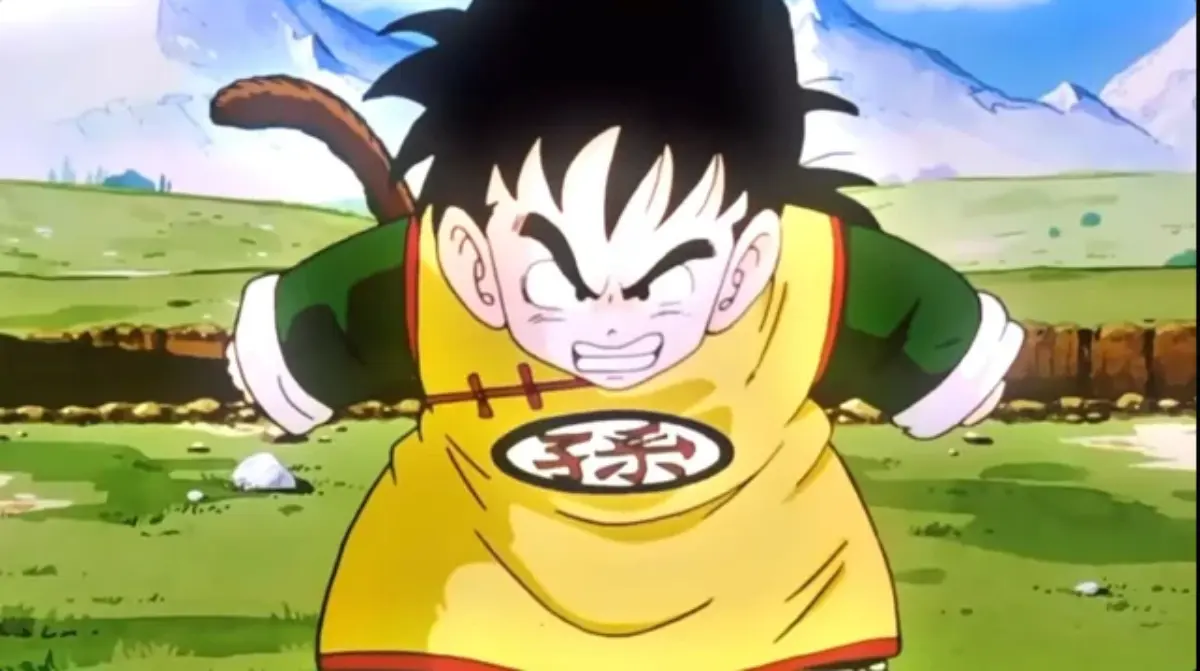
The Cave (Saiyan Saga: Piccolo’s “training”)
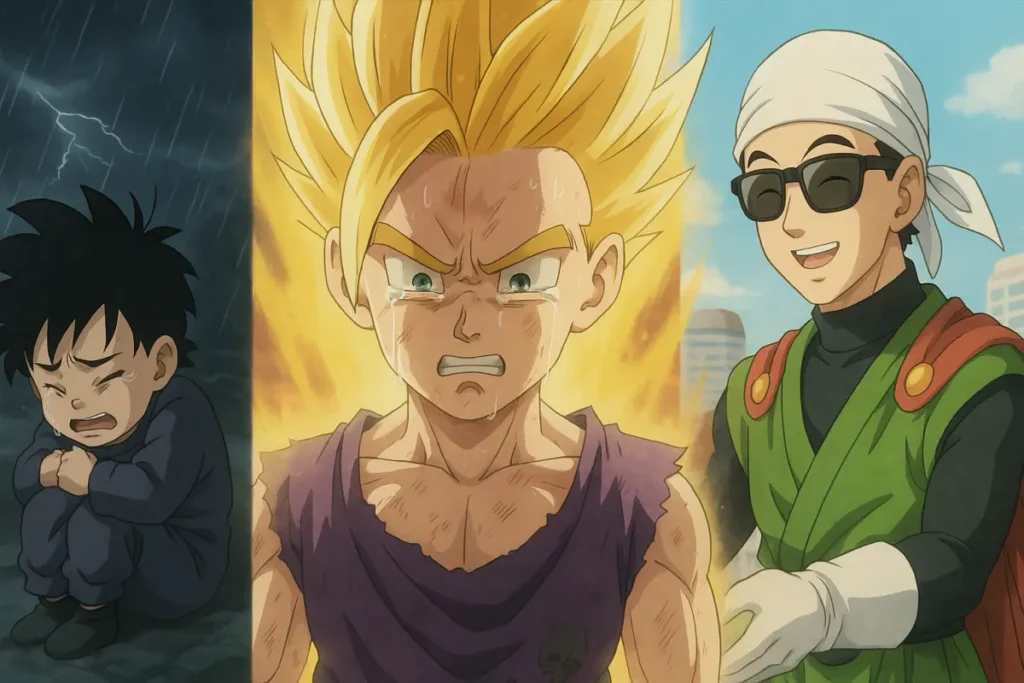
What we see: Piccolo dumps a 4-year-old in the wilderness “to toughen him up.” Night. Thunder. A kid curled up, sobbing.
What it proves: This isn’t a grit montage; it’s childhood as collateral. The world tells Gohan: grow up or people die.From day one, power is welded to fear.
The Cliff & the Dinosaurs (still Saiyan Saga)
What we see: Trial-by-fall, trial-by-fang, rationing apples like a tiny soldier.
What it proves: Gohan learns he can survive—but only by swallowing panic. He doesn’t hate training; he hates that the syllabus is “don’t die.”
Namek: Funeral Planet (Frieza arc
What we see: Villages erased, Dende cut down, Krillin murdered; “Dad’s gone?” hangs in the air even when Goku’s just… not there.
What it proves: Rewards arrive after loss. Every power spike is stapled to a body count. The lesson branded into him: rage is the only language monsters respect.
The Trigger (Cell Games: Android 16’s last words)
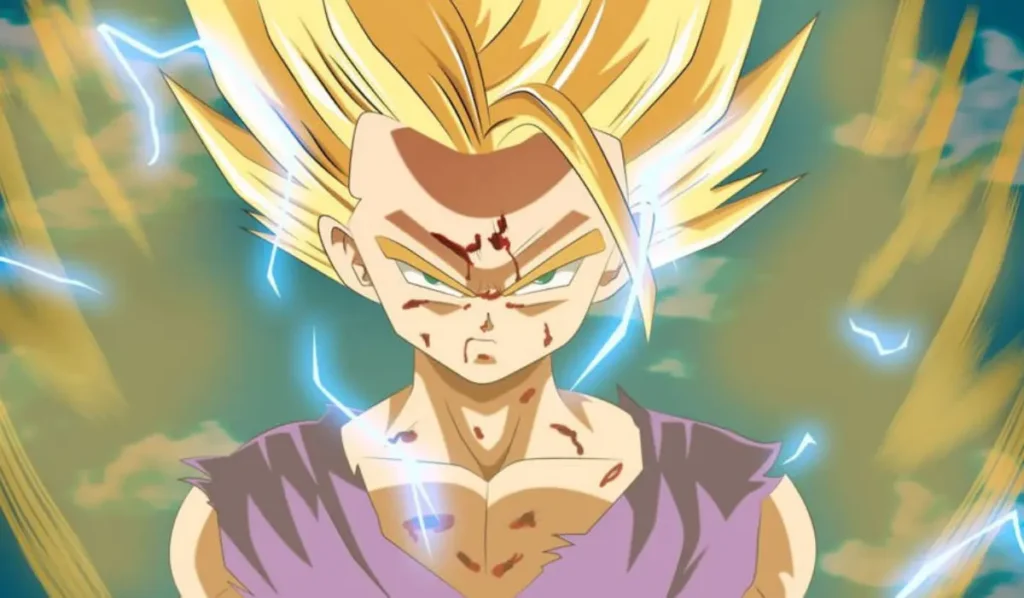
What we see: An adult sadist corners an eleven-year-old; 16’s head gets crushed in front of him. The camera cuts to quiet, then Gohan detonates into SSJ2.
What it proves: His “greatest moment” is literally a breakdown weaponized. Goku frames it as faith; the world frames it as break so you can save us. That switch flip is tragic, not triumphant.
The Confession (between fights)
What we see: Gohan saying he wants to be a scholar—and meaning it. He still enjoys structured sparring with Goku/Piccolo, enters tournaments, grins when it’s controlled.
What it proves: Small correction: he doesn’t hate fighting; he hates open-ended conflict. Structure? Yes. Scoreboards measured in bodies? No.
Great Saiyaman: Joy Without Casualties (Buu lead-up)
What we see: Helmet, poses, low-stakes hero work, Videl’s grin. He lights up stopping crime without leveling the block.
What it proves: This is the real Gohan thesis: help people, keep the city intact, go to class. Power as community service, not identity.
Contained Stakes (Tournament of Power)
What we see: Gohan strategizing eliminations, choosing restraint, thriving when the rules promise no one dies.
What it proves: Give him boundaries and he flourishes. He’ll push himself hard—when the cost isn’t a funeral.
Only When It’s Family (DBS: Super Hero)
What we see: Threat hits home → Gohan unlocks the monster again to save the people he loves. Then? He dials back.
What it proves: He’ll pay the old tax only when necessary. Not a relapse—an emergency brake.
Findings (what the evidence actually says)
- Gohan loves the craft (training, structure, growth).
- He hates the cost (chaos, casualties, moral debt).
- “Scholar” wasn’t Chi-Chi’s script; it was his.
- Heroism, yes. War as lifestyle, no.
Why Later Gohan Makes Total Sense
“Fell off”? Nah—he got free. Every historic surge (Namek terror, Cell’s murder show) asked a gentle kid to bleed for progress. Adult Gohan draws a line: I can fight. I will fight. I won’t worship it. When stakes spike (Buu, Super), he steps up, finishes the job, returns to balance. Boundary ≠ cowardice.
If You Rewatch One Thing Tonight
Run this chain: Cave night → Namek deaths → 16’s head → SSJ2 → Great Saiyaman patrol → ToP leadership.
Watch his face each time: terror → compliance → break → regret → relief → calm control. Once you see the pattern, you can’t unsee it—Gohan’s not the “lazy Saiyan”; he’s the only one who read the bill and said, “I’m not living like that.”
What exhibit did I miss that still guts you—one cutaway, one line, one beat where “power” clearly costs too much?

- Vegeta’s Pride Was Never Arrogance — It Was the Fear of Being Forgotten - October 30, 2025
- When Whitebeard Died Smiling — The Definition of a Complete Life - October 28, 2025
- Nami’s “Help Me” — The Most Human Moment in One Piece - October 25, 2025