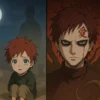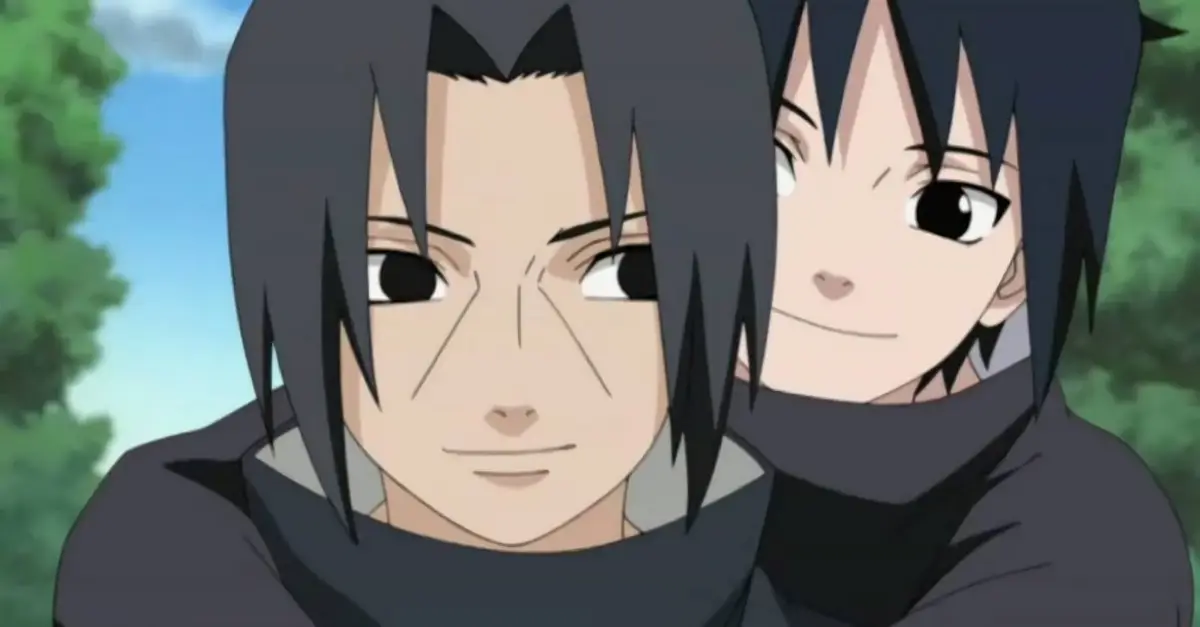
He isn’t “the edgy emo kid.” He’s a sweet little brother turned into a weapon by a village-sized lie. To see it, you have to watch the scenes that broke him—one after another—then ask the questions the show practically dares you to ask.
The hallway of the Uchiha compound (the night of the massacre)
Question: What destroys a kid faster than losing his family?
Answer: Losing them by order of his own village. Sasuke steps over the threshold, finds his parents’ bodies, and faces the brother he idolized—blade wet, eyes empty. It isn’t a random attack. It’s a sanctioned purge. The message baked into that frame is brutal: the place that should have protected him made him an orphan.
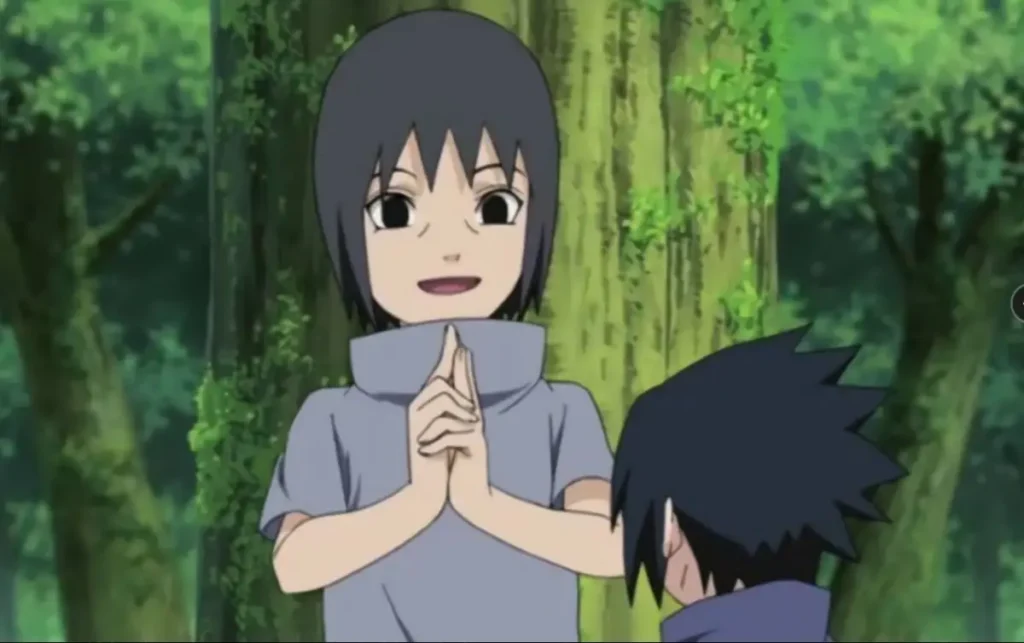
Question: Why does his hatred feel bottomless?
Answer: Because it’s not just grief. It’s betrayal with paperwork.
The hospital rooftop → Valley of the End (the choice to leave)
Question: Why walk out on your friends?
Answer: Because home is the crime scene. People say he “betrayed the Leaf,” but the Leaf had already betrayed the Uchiha. When the Sound Four dangle a shortcut to power, Sasuke doesn’t pick Orochimaru over Naruto—he picks revenge over a village that looked him in the eye and kept the secret.
Question: Was it selfish?
Answer: It was survival math for a kid who thinks strength is the only language anyone ever listened to.
The hotel corridor / roadside confrontations with Itachi (years of hate aimed at one man)
Question: Why fixate on killing Itachi?
Answer: Because the story he was given says this is justice. Every reunion is designed to keep the wound open—Itachi humiliates him, repeats “you’re weak,” and resets Sasuke to that hallway. If revenge is the only path offered, of course he sprints down it.
Itachi’s death → the reveal (the truth detonates)
Question: What happens when you finally kill the monster and learn he was protecting you?
Answer: Your target evaporates and your rage needs a new home. The reveal reframes everything: Itachi carried the massacre so the village could keep its peace and Sasuke could live. In one conversation, Sasuke loses his family again—first to blades, then to the truth.
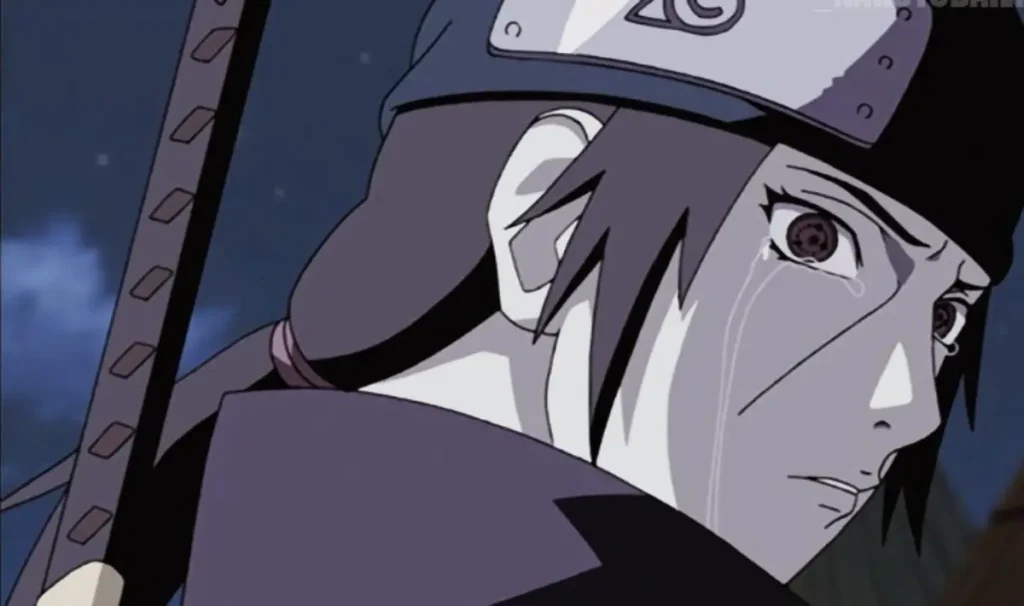
Question: Who deserves the hate now?
Answer: The system that demanded a big brother murder his parents and wear “traitor” as a mask.
The Kage Summit / Danzō fight (proof of the rot)
Question: “Is Sasuke overreacting, or is the Leaf actually that dirty?”
Answer: Look at Danzō’s arm. A sleeve of stolen Sharingan and a mouth full of “for the village.” It’s visual indictment. Sasuke doesn’t need a manifesto; the shot of that arm is the manifesto.
Question: Why “burn it all”?
Answer: Because the people who call it peace are the ones who cashed the check written in Uchiha blood.
Bridge standoff with Team 7 / reunions that nearly land
Question: If he cared about Naruto and Sakura, why aim at Konoha anyway?
Answer: Because love never canceled the ledger. Sasuke’s not lashing out at them; he’s holding the village to account. Naruto had hands pulling him back from the edge. Sasuke had hands pushing him over it—until it was too late.
Question: Is there any part of that kid left?
Answer: Yes – The boy who wanted acknowledgment. He’s still there, buried under a promise he made to the corpses in that hallway.
The declaration: “I will destroy Konoha”
Question: Is that just edgy posturing?
Answer: No. It’s the most honest sentence he can say after the reveal. He isn’t chasing power for a throne; he’s pursuing punishment for a state crime. In his mind, razing Konoha is the only proportional answer to genocide disguised as peace.
Why his revenge makes sense (and why it’s so dark)
Question: Why does Sasuke’s arc feel heavier than standard “power-hungry villain” stuff?
Answer: Because the motive isn’t ego—it’s accountability. He’s not trying to prove he’s strongest; he’s trying to balance a scale the village snapped in half.
Question: So who created the “monster”?
Answer: The same system that raised the hero. Naruto was rescued by bonds; Sasuke was sculpted by secrets. Different outcomes, same village.
Final answer
You know what’s messed up about Sasuke? He isn’t irrational. He’s inevitable—the logical result of a child walking into a room that should have been safe and finding a state-sanctioned nightmare. Call it edgy if you want, but scene by scene, it’s a case file: massacre → abandonment → weaponization → truth detonation → retaliation.
And if you still ask, “Why would he want to burn Konoha?”—rewind to that hallway. Then ask yourself what you’d set on fire.

- Vegeta’s Pride Was Never Arrogance — It Was the Fear of Being Forgotten - October 30, 2025
- When Whitebeard Died Smiling — The Definition of a Complete Life - October 28, 2025
- Nami’s “Help Me” — The Most Human Moment in One Piece - October 25, 2025