A Death That Didn’t Feel Like Tragedy
Whitebeard’s death that doesn’t feel like a tragedy. It feels… full.
Not in the way stories usually end — not in the “he died a hero” sense — but in that rare, aching way where you realize a man truly lived the life he wanted, right down to his final breath.
It’s strange, isn’t it? How an ending drenched in blood and chaos can somehow feel peaceful.
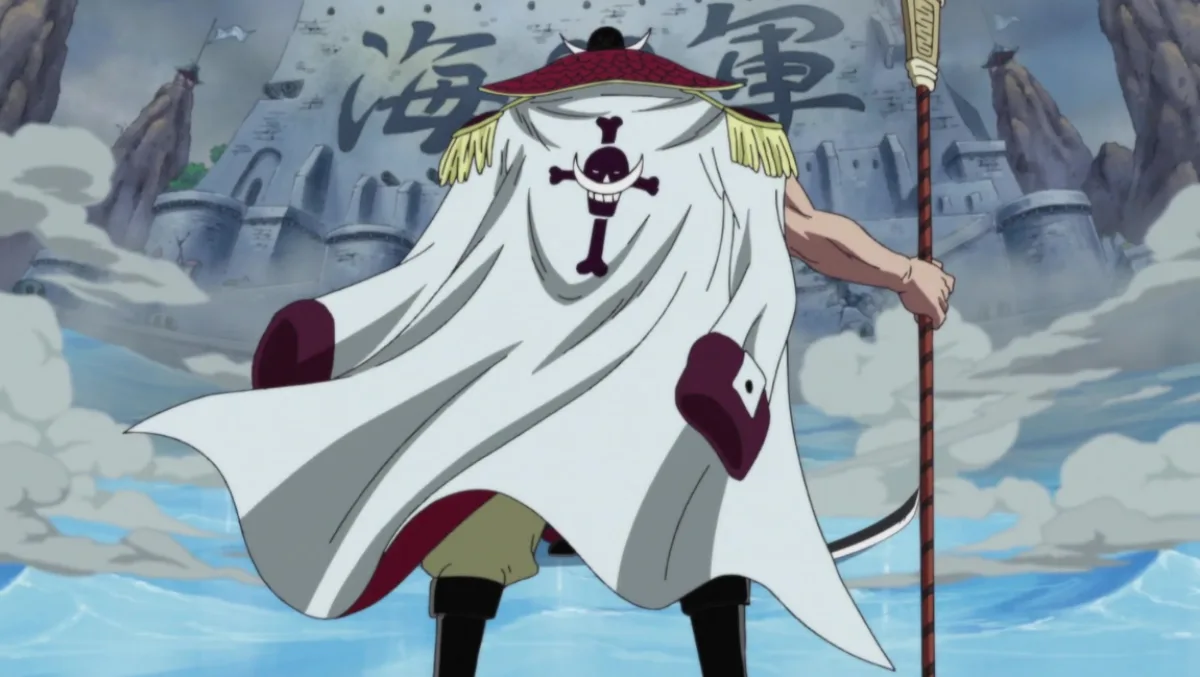
I’ve rewatched that scene more times than I can count — the sky splitting apart, the world collapsing around him, the man himself: massive, unshaken, standing tall even as his body gave out.
And every time, I think the same thing — this is what it looks like when someone finishes their story on their own terms.
Whitebeard didn’t die chasing something.
He died having already found it.
Whitebeard’s Dream Was Never Power — It Was Family
While everyone else in One Piece was reaching for something — freedom, legacy, power, truth — Whitebeard’s dream was painfully human.
He didn’t want to be the strongest. He didn’t want to be the Pirate King.
He just wanted a family. Someone to call “son.” Someone to protect.
And that’s what makes it hit so hard — that the strongest man in the world was once a lonely orphan who only wanted people to love him back.
You see that and realize his entire life was him building a home out of broken people — misfits, strays, kids who had no one.
He turned them into a crew, called them sons, and made them believe they belonged somewhere.
That’s what made his death feel complete.
Because even as the world fell apart, his family stood behind him — not as soldiers, but as sons.
The Final Act of a Father
When he planted his feet into the ground at Marineford and told them to run, it wasn’t just a command. It was the final act of a father.
The way he tore the earth apart to separate himself from them — that wasn’t just him creating a barrier. It was him saying, “I’ll hold the line. You live.”
There’s a cruel beauty in that moment — the world’s strongest man, already dying, using the last of his strength not to save himself but to make sure his sons survived.
And then came the blows. Hundreds of them. Sword slashes. Cannonballs. Bullets.
Each one a reminder that this man refused to fall.
267 sword wounds. 152 bullets. 46 cannonballs.
Not one mark on his back. Because he never turned away — not once. Not in life, not in death.
That part always gets me — the narrator’s voice cutting through the chaos, almost reverent:
“Whitebeard, who had no scars on his back.”
It’s not even about pride at that point.
It’s about conviction.
He lived his entire life facing forward, even when the world tried to crush him.
He never ran, never surrendered, never compromised what he believed in.
There’s a quiet kind of poetry in that.
The Smile That Said Everything
But what really breaks me isn’t the strength.
It’s the peace.
The way he smiles at the end — not the manic, defiant smile of Gol D. Roger, who died setting something in motion.
Whitebeard’s smile is softer.
It’s the smile of a man who’s done.
Who’s seen everything he wanted to see. Who’s loved, fought, lost, and still has no regrets.
Roger smiled because the future was beginning.
Whitebeard smiled because his past was enough.
And that’s such a rare kind of satisfaction — to die not wanting more.
“The One Piece Is Real” — His Final Gift to the World
When he declared, “The One Piece is real,” it wasn’t for himself.
It was his final gift to the world.
The Marines wanted to kill the dream — execute Ace, end the age of pirates, erase Roger’s will.
Whitebeard did the exact opposite.
He turned his death into a spark.
A dying man reigniting the fire the world government spent decades trying to smother.
That wasn’t a statement — it was a promise.
A message to every lost soul still chasing something out there: keep going.
Whitebeard Chose His Death
That’s the part that always gets overlooked — the awareness.
Whitebeard wasn’t just dying in battle. He chose his death.
He curated it.
Every word, every move, every last ounce of strength was deliberate.
He knew how he wanted to go out: protecting his sons, defending their future, reigniting the dream.
That’s not just bravery — that’s authorship.
He wrote his own ending.
Why His Weakness Was the Point
People say he should’ve been younger, stronger — that it would’ve been more epic if he wasn’t sick, if he could’ve fought at full power.
But that’s missing the point.
The fact that he was old, sick, and still tore Marineford apart — that’s the meaning.
His body was failing, but his spirit refused.
You could see the tremors in his hands, the blood in his mouth, the way he barely stood — and yet he stood.
That’s what made it beautiful.
He was a dying man who never fell.
A Death That Feels Complete
And maybe that’s why his death doesn’t feel sad.
Because he didn’t lose.
He didn’t leave anything undone.
His story wasn’t cut short — it was finished.
He built what he wanted. He protected it. He passed it on.
I think about that a lot — how Roger’s death was the start of a fire, and Whitebeard’s was the glow that kept it alive.
They both smiled at the end, but for different reasons.
Roger smiled because the world would change.
Whitebeard smiled because he didn’t need it to.
His world had already been enough.
The Meaning of a Complete Life
Maybe that’s what a complete life really looks like.
Not power. Not fame. Not discovery.
Just peace.
The kind that comes from knowing you gave everything you had to the people you loved, and they’ll keep living because of you.
Every time I see him standing there — back straight, eyes closed, a faint smile on his face — I feel this strange comfort.
Like death doesn’t have to be cruel if you lived right.
Like maybe all the scars and struggles mean something if you can face the end without fear.
Whitebeard didn’t die a legend.
He lived one.
And maybe that’s the real question his death leaves behind —
Would you rather die chasing something endless,
or die holding everything you ever wanted?

- Vegeta’s Pride Was Never Arrogance — It Was the Fear of Being Forgotten - October 30, 2025
- When Whitebeard Died Smiling — The Definition of a Complete Life - October 28, 2025
- Nami’s “Help Me” — The Most Human Moment in One Piece - October 25, 2025